
PsycheTel AUSTRALIA is a telehealth psychiatrist service in Australia, connecting patients with AHPRA registered psychiatrists through online consultations.
Anxiety and When Worry Starts Affecting Daily Life
Worry is a normal part of life.
You may feel nervous before an interview, worry about an upcoming event or feel concerned when someone you care about is unwell.
These feelings can come and go.
Anxiety can be different.
For some people, worry becomes difficult to control or starts affecting sleep, work, relationships and everyday activities.
Anxiety can affect both the mind and body. It may involve racing thoughts, ongoing worry, tension, changes in sleep or physical symptoms.
Understanding these signs can help you decide when it may be useful to speak with a health professional.
What Is Anxiety?
Anxiety is a normal human response to stress or situations that feel uncertain or threatening.
However, anxiety can become a mental health concern when symptoms continue, feel difficult to manage or interfere with everyday life.
The Australian Government lists anxiety among the common types of mental health conditions in Australia. It also notes that mental health conditions can be short or long term and can affect people in different ways.
What Can Anxiety Feel Like?
People experience Anxiety in different ways.
You may notice:
- Constant worrying
- Racing thoughts
- Repeated “what if” thoughts
- Feeling tense
- Difficulty relaxing
- Problems sleeping
- Avoiding certain situations
- Difficulty concentrating
- Feeling restless
- Physical symptoms during periods of anxiety
Some people mainly notice thoughts.
Others notice physical symptoms such as muscle tension, a racing heart or difficulty settling down.
The experience can be different from person to person.
When Does Worry Become a Problem?
Everyone worries from time to time.
The important question is how much the worry affects your life.
You may find yourself spending a large part of the day thinking about possible problems.
You may repeatedly imagine something going wrong.
You may also avoid places, people or activities because they make you feel anxious.
If these patterns continue and affect your everyday life, it may be useful to speak with your GP or a mental health professional.
Anxiety Can Affect Sleep
Anxiety and sleep can affect each other.
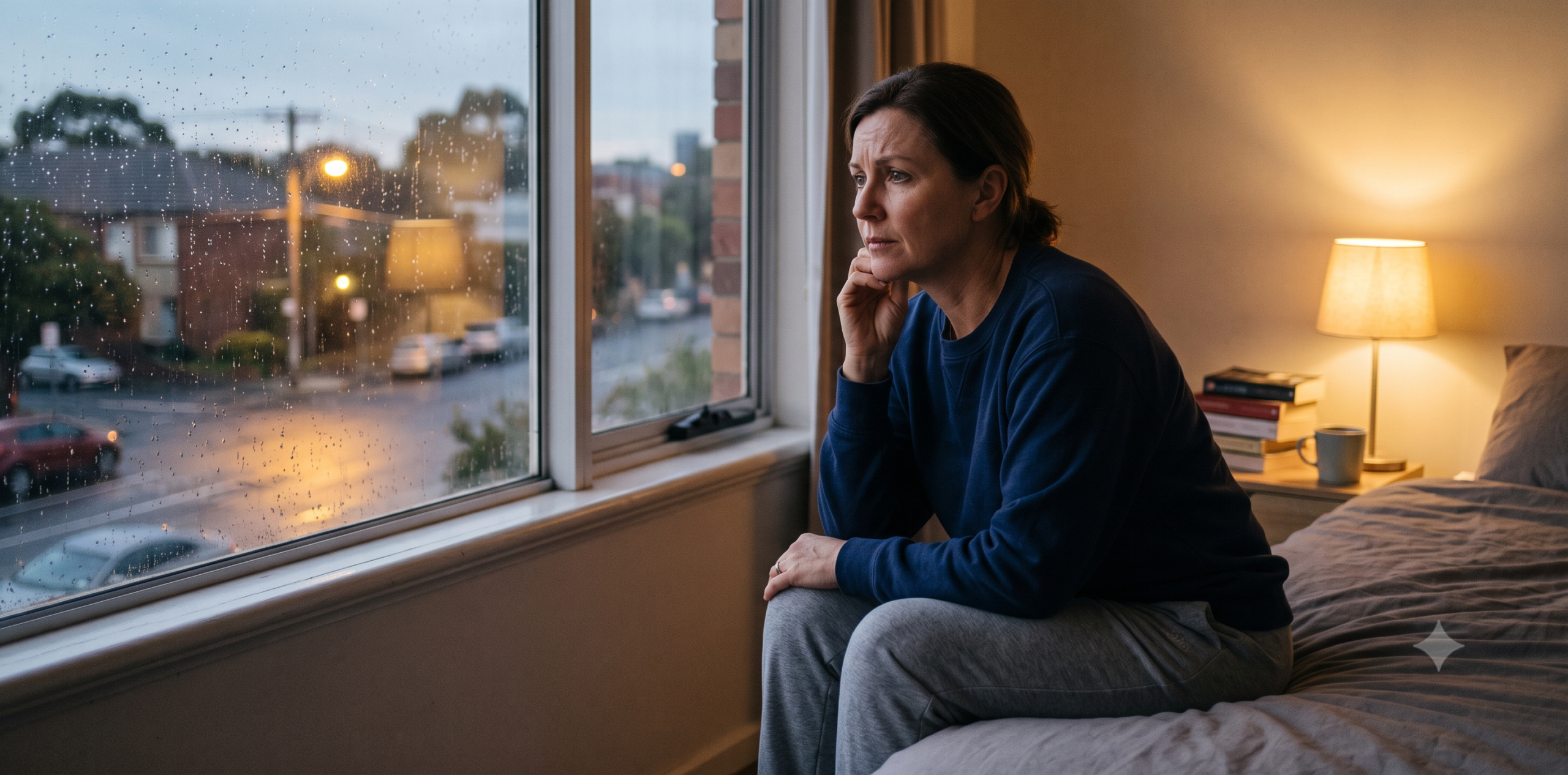
You may go to bed feeling tired but find that your mind keeps thinking about problems.
You may replay conversations or think about what could happen tomorrow.
Poor sleep can then make it harder to manage stress during the day.
If this becomes a regular pattern, it is worth discussing with a healthcare professional.
Sleep problems can have many causes, so they should not automatically be assumed to be caused by Anxiety.
Anxiety Can Affect Work and Relationships
Anxiety can also affect everyday responsibilities.
You may avoid meetings because you are worried about making a mistake.
You may find it difficult to speak in groups.
You may spend a lot of time checking whether something has been done correctly.
You may also seek repeated reassurance from people around you.
These behaviours can become tiring and may affect relationships over time.
If anxiety is making normal activities harder, professional support may be worth considering.
Anxiety and Other Mental Health Conditions
Anxiety can occur alongside other mental health concerns.
For example, someone may experience Anxiety and Depression at the same time.
Some people seeking an ADHD assessment may also report anxiety symptoms.
This is why a full assessment can be useful.
PsycheTel Australia provides separate services for Anxiety, Depression and ADHD.
The aim of assessment is to understand the person’s concerns rather than focus on one symptom alone.
What Happens During an Anxiety Assessment?
A psychiatrist may ask about:
- When your anxiety started
- What situations make it worse
- How often you experience symptoms
- How it affects your daily life
- Your sleep
- Your physical health
- Your mental health history
- Your family history
- Medicines you take
- Previous treatment or support
Your psychiatrist may also ask about other symptoms.
This can help provide a clearer picture of what you are experiencing.
What Can Anxiety Support Involve?
There is no single approach that suits everyone.
Depending on the assessment, support may include:
- Psychological therapy recommendations
- Medication where clinically appropriate
- Practical strategies
- Education about anxiety
- Follow up with a psychiatrist
- Working with your GP
- Referral to other health professionals
The type of care recommended depends on the person’s individual situation.
PsycheTel’s Anxiety service states that assessment may also consider co-existing concerns such as Depression, ADHD, trauma and sleep difficulties.
Anxiety Support Through Telehealth
PsycheTel Australia provides secure telehealth psychiatric consultations across Australia.
This means people who are suitable for telehealth may be able to speak with a consultant psychiatrist without travelling to a physical clinic.
PsycheTel states that its service provides Australia wide access and works with patients, GPs and existing healthcare teams where appropriate.
Whether telehealth is suitable depends on your individual needs and clinical circumstances.
Learn More About Anxiety Support
You can visit the Anxiety service page to learn more about assessment and psychiatric care.
If you have questions about accessing the service, you can contact PsycheTel Australia.
When Should You Seek Help?
Consider speaking with your GP or a mental health professional if Anxiety is:
- Affecting your sleep
- Affecting work or study
- Affecting relationships
- Making you avoid everyday activities
- Making it difficult to concentrate
- Causing ongoing distress
- Becoming difficult to manage on your own
You do not need to wait until symptoms become severe before asking for help.
A health professional can help you understand your symptoms and discuss what support may be appropriate.
Frequently Asked Questions
Is Anxiety normal?
Some anxiety is a normal part of life. It can become a concern when symptoms continue, are difficult to manage or interfere with daily life.
Can Anxiety affect sleep?
Yes. Worry and racing thoughts can make it difficult for some people to relax or sleep.
Can Anxiety cause physical symptoms?
Anxiety can be linked with physical sensations such as tension, a racing heart or difficulty settling. However, physical symptoms can have many causes and should be discussed with a health professional when needed.
Can Anxiety and Depression happen together?
Yes. Some people experience symptoms of both Anxiety and Depression. A professional assessment can look at both.
Can I have an Anxiety assessment through telehealth?
Telehealth may be suitable for some people. PsycheTel Australia provides secure telehealth psychiatric consultations across Australia.
A Simple Next Step
If Anxiety is affecting your sleep, work, relationships or everyday activities, speaking with a qualified health professional can help you understand your symptoms and available care.
Visit PsycheTel Australia to learn more about Australia wide psychiatric telehealth.
Anxiety can affect both the mind and body, and an assessment can help you understand what may be happening.
Conclusion
Anxiety is something many people experience.
The difference is how often it happens, how difficult it is to manage and how much it affects everyday life.
If worry is making it harder to sleep, work, study, maintain relationships or take part in normal activities, it may be useful to speak with a health professional.
A psychiatrist can assess your symptoms, history and wider circumstances and discuss suitable care where appropriate.
PsycheTel Australia provides secure telehealth psychiatry across Australia for people who are suitable for this type of care.
This article is for general educational purposes only. It does not provide a diagnosis or replace an individual assessment by a qualified health professional.
Helpful External Resources
Australian Government Department of Health, Disability and Ageing