
How to Prepare for an ADHD Assessment in Australia
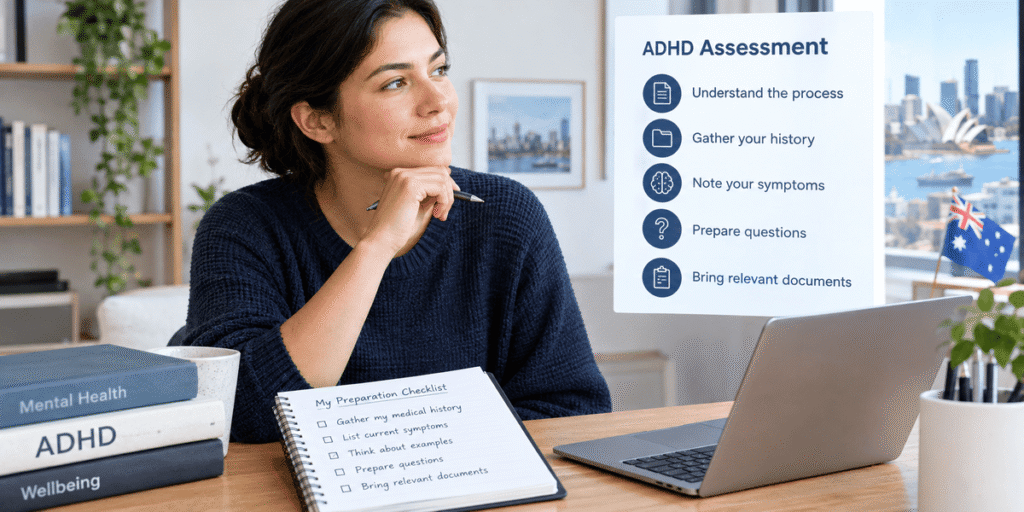
PsycheTel Australia provides specialist psychiatric consultations through secure telehealth, helping adults access ADHD assessment and care across Australia. How to Prepare for an ADHD Assessment in Australia Do you often lose track of tasks, struggle to stay organised or find it difficult to concentrate? These experiences can affect work, relationships and everyday responsibilities. While everyone experiences these challenges sometimes, ongoing difficulties may lead you to consider whether you have attention deficit hyperactivity disorder (ADHD). An ADHD Assessment Australia search can bring up many websites, questionnaires and healthcare providers. Knowing where to start and what to expect can make the process easier to understand. An ADHD assessment is more than completing an online test. A qualified health professional considers your symptoms, personal history and how these difficulties affect your daily life. This guide explains how adults can prepare for an ADHD assessment, what information may be useful and how specialist telehealth care through PsycheTel Australia may fit into the process. What Is an ADHD Assessment? An ADHD assessment is a clinical evaluation used to understand whether a person’s experiences and symptoms meet the criteria for ADHD. ADHD is a neurodevelopmental condition that can affect attention, activity levels and impulse control. It can influence how a person manages tasks, follows instructions, plans activities and responds to everyday demands. In adults, possible signs may include: Difficulty maintaining attention during tasks or conversations. Frequently forgetting appointments or responsibilities. Problems with planning, organisation and time management. Starting tasks but struggling to finish them. Feeling restless or finding it difficult to sit still. Acting quickly without fully considering the consequences. Difficulty managing interruptions or waiting. These experiences can have different causes. Sleep difficulties, anxiety, depression and other health concerns may also affect concentration and organisation. An ADHD Assessment Australia pathway helps a qualified professional explore these concerns rather than relying on symptoms alone. You can learn more about ADHD from Healthdirect Australia. When Should You Consider an ADHD Assessment? You may consider a professional assessment if attention, organisation, impulsivity or restlessness have been affecting your everyday life over time. For example, you may regularly miss deadlines despite trying to stay organised. You might find it difficult to complete work, remember commitments or manage several responsibilities at once. Some adults only begin exploring ADHD later in life. They may have developed ways to manage their difficulties during school or early employment, but find these strategies harder to maintain when responsibilities increase. Consider seeking professional advice if: Concentration difficulties regularly affect your work or studies. You struggle with time management and daily responsibilities. Similar difficulties occur in different parts of your life. You have experienced these patterns since childhood. You want to understand whether ADHD or another concern may explain your experiences. An ADHD Assessment Australia search can be a starting point for learning about available care. However, recognising a few symptoms does not automatically mean you have ADHD. A qualified professional can assess your circumstances and explain the next steps. How to Prepare for an ADHD Assessment Preparing some information before your appointment can help you explain your experiences clearly. You do not need to have every document available before seeking advice. 1. Write Down Your Main Concerns Think about the difficulties that led you to consider an assessment. You might find it useful to write down examples involving concentration, organisation, time management, restlessness or impulsive decisions. Try to describe what happens in everyday situations. For example, instead of writing only “I have trouble focusing”, explain whether you often lose track of conversations, leave tasks unfinished or need repeated reminders. These examples can help your clinician understand how the difficulties affect you. 2. Think About Your Childhood ADHD begins during childhood, even when it is not recognised until adulthood. Your clinician may ask about your early development, school experiences and behaviour before the age of 12. If available, useful information may include: Old school reports. Comments from teachers about attention or organisation. Childhood records or previous assessments. Observations from parents, siblings or other people who knew you when you were younger. You may not have access to these records. Do not assume that missing school reports automatically prevent you from seeking an assessment. Your clinician will explain what information is needed in your circumstances. 3. Consider How Symptoms Affect Different Areas of Life ADHD symptoms are assessed in the context of everyday functioning. Think about how your difficulties affect different settings, such as work, home, study and relationships. You could consider questions like: Do I regularly forget important tasks? Do I struggle to follow a plan even when I want to? Do I find it difficult to complete work on time? Do these difficulties happen in more than one setting? Have these patterns been present for a long time? An ADHD Assessment Australia appointment provides an opportunity to discuss these experiences with a clinician. Answer as honestly as possible, including both your difficulties and the strategies you use to manage them. 4. Prepare Your Medical and Mental Health History Your clinician may ask about your physical health, mental health, sleep, current medicines and previous treatment. This information matters because several conditions can affect concentration, energy, memory and behaviour. Before your appointment, consider preparing a list of: Current and previous medicines. Relevant physical health conditions. Previous mental health assessments. Sleep difficulties. Symptoms of anxiety or low mood. Any other concerns that may affect your daily functioning. You do not need to work out the cause yourself. Your clinician will use this information as part of the assessment. 5. Prepare Questions You Want to Ask It is normal to have questions before a specialist appointment. Writing them down can help you remember what you want to discuss. You may want to ask: What does the assessment involve? What information should I provide? Will I need more than one appointment? What happens if the assessment does not confirm ADHD? What treatment or support options may be considered? How will my GP be involved in ongoing care? Preparing questions can
PTSD Assessment: When Should You Consider a Psychiatric Assessment?

PTSD Assessment: When Should You Consider a Psychiatric Assessment? After experiencing something traumatic, it is normal to feel unsettled, worried or on edge. For some people, these feelings continue and begin to affect sleep, relationships, work or everyday life. This can raise an important question. Could what I am experiencing be related to PTSD? A PTSD Assessment can help a qualified mental health professional understand your symptoms, history and how they are affecting your life. Post-traumatic stress disorder can occur after experiencing, witnessing or learning about a traumatic event. Healthdirect reports that around 12 in every 100 Australians will experience PTSD at some point in their lives. Understanding the signs can be the first step towards deciding whether professional support may be appropriate. What Is PTSD? Post-traumatic stress disorder, commonly known as PTSD, is a mental health condition that can develop after a traumatic event. Trauma can include experiences such as: Serious accidents Physical or sexual assault Natural disasters War or military experiences Serious injury Witnessing someone being seriously injured or killed Other events involving serious threat or danger Not everyone who experiences trauma develops PTSD. People can respond to the same event in very different ways. Some people may recover over time, while others may continue to experience symptoms that affect their everyday lives. This is one reason why a PTSD Assessment looks at the individual rather than only the traumatic event itself. What Are the Common Signs of PTSD? PTSD can affect people differently. Healthdirect describes four main groups of PTSD symptoms. 1. Re-experiencing the Trauma Some people may experience: Distressing memories Flashbacks Nightmares Strong reactions to reminders of the event Physical reactions when reminded of the trauma These experiences can sometimes feel unexpected or difficult to control. 2. Avoiding Reminders A person may begin avoiding: Certain places People Activities Conversations Thoughts connected with the traumatic experience Avoidance can sometimes affect work, relationships and normal activities. 3. Changes in Thoughts and Mood PTSD may also involve: Feeling disconnected from others Guilt Anger Low mood Negative thoughts about yourself or others Losing interest in activities Difficulty remembering parts of the event 4. Feeling Constantly Alert Some people may feel as though they always need to look out for danger. This can involve: Being easily startled Difficulty sleeping Irritability Difficulty concentrating Feeling tense or on edge Experiencing one of these symptoms does not automatically mean you have PTSD. A qualified professional needs to consider the overall pattern of symptoms and their impact on your life. How Long Can PTSD Symptoms Last? Trauma responses can happen soon after an event. Some people may experience distress for a short period and gradually feel better. For others, symptoms may continue or appear later. Healthdirect notes that PTSD symptoms can sometimes begin months after the traumatic event. If symptoms continue and begin affecting your daily life, speaking with a GP or mental health professional may be appropriate. A PTSD Assessment can help explore what you have been experiencing and whether further psychiatric assessment or support should be considered. When Should You Consider a PTSD Assessment? There is no single experience that means everyone needs a PTSD Assessment. However, you may want to speak with a health professional if you notice ongoing changes after a traumatic experience. For example: Your Sleep Has Changed You may have difficulty falling asleep, staying asleep or experience distressing dreams. You Keep Reliving What Happened Unwanted memories or reminders of the event may continue to come into your thoughts. You Are Avoiding Everyday Situations You may avoid places, people or activities because they remind you of what happened. You Feel Constantly On Edge You may feel alert to possible danger even when you are in a situation that is currently safe. Your Relationships or Work Are Being Affected Ongoing trauma symptoms can make it harder to concentrate, communicate or take part in normal activities. These experiences can have several possible causes. A PTSD Assessment does not assume that PTSD is the cause. It provides an opportunity for a qualified professional to understand the broader picture. What Happens During a PTSD Assessment? A PTSD Assessment is generally based on a detailed discussion about your experiences and symptoms. A psychiatrist may ask about: The traumatic experience When your symptoms began How often symptoms occur Sleep Mood Anxiety Concentration Relationships Work or study Previous mental health concerns Current support Other relevant health information The psychiatrist may also consider whether symptoms could be related to another mental health condition or whether more than one concern may be present. The aim is to understand your individual circumstances rather than make assumptions based on one symptom. Does a PTSD Assessment Mean You Will Receive a Diagnosis? No. An assessment and a diagnosis are not the same thing. During a PTSD Assessment, a psychiatrist considers your symptoms, history and their impact on your everyday life. A diagnosis is made only when the appropriate clinical criteria are met. Other conditions can also involve symptoms such as anxiety, sleep difficulties, low mood, irritability or difficulty concentrating. This is why a broader psychiatric assessment can be useful when symptoms are complex or unclear. Can PTSD Be Assessed Through Telehealth? Telehealth may be suitable for some people seeking psychiatric assessment. PsycheTel Australia provides secure telehealth consultations with AHPRA registered consultant psychiatrists across Australia. An online PTSD Assessment can provide an opportunity to discuss your symptoms with a psychiatrist without needing to attend a physical waiting room. However, telehealth is not suitable for every situation. The psychiatrist can consider your individual circumstances and whether an online consultation is appropriate. You can learn more about PsycheTel’s PTSD service. What Support May Be Discussed After an Assessment? The next step depends on the individual assessment. A psychiatrist may discuss different forms of mental health care or recommend working with another qualified mental health professional where appropriate. Support may involve: Psychological therapy Referral to an appropriate mental health professional Ongoing psychiatric care Coordination with your GP Monitoring of symptoms Further assessment where needed Healthdirect
When Should You Consider an Anxiety Consultation

PsycheTel Australia provides online psychiatric consultations across Australia, connecting people with AHPRA registered psychiatrists through secure telehealth care. When Should You Consider an Anxiety Consultation Feeling worried from time to time is a normal part of life. However, ongoing worry, physical symptoms, poor sleep or difficulty managing everyday activities may be signs that it is worth speaking with a health professional. An Anxiety Consultation can provide an opportunity to discuss what you have been experiencing, how it affects your daily life and whether further assessment or support may be appropriate. According to healthdirect, anxiety can affect concentration, sleep and everyday activities when symptoms become ongoing or overwhelming. What Is Anxiety? Anxiety is the body’s natural response to a perceived or possible threat. Everyone experiences anxious feelings at different times. For some people, these feelings may become ongoing or difficult to manage. Anxiety can affect thoughts, emotions, physical sensations and everyday behaviour. Some people may experience: Ongoing worry Racing thoughts Difficulty relaxing Problems concentrating Changes in sleep Physical tension Feeling restless or on edge Avoiding situations because of worry Panic symptoms Difficulty managing normal daily activities These experiences can vary from person to person. Having one or more of these symptoms does not automatically mean that someone has an anxiety disorder. When Does Anxiety Become a Concern? Occasional worry is different from anxiety that continues to affect daily life. It may be worth discussing your symptoms with a GP or mental health professional if you notice that worry is becoming difficult to control or is affecting your work, study, relationships, sleep or other everyday activities. Healthdirect recommends speaking with a doctor or mental health professional when anxiety symptoms are affecting everyday life. An Anxiety Consultation may be considered when you want to better understand these symptoms and discuss whether a psychiatric assessment is appropriate. Signs You May Want to Seek Professional Support Your Worry Is Difficult to Control You may find yourself thinking about the same concern repeatedly or expecting something to go wrong even when there is no immediate reason to feel unsafe. Your Sleep Is Being Affected Ongoing worry can make it difficult to relax at night or settle your thoughts before sleep. You Are Avoiding Everyday Situations Some people begin avoiding places, activities or situations because they expect them to cause distress. Anxiety Is Affecting Daily Activities If worry is making work, study, relationships or normal responsibilities harder to manage, professional support may be worth considering. Physical Symptoms Are Present Anxiety can also involve physical symptoms such as muscle tension, a racing heart, shakiness or shortness of breath. Physical symptoms can have different causes, so it is important to discuss them with a qualified health professional rather than assuming they are caused by anxiety. What Happens During an Anxiety Consultation? An Anxiety Consultation is generally focused on understanding your individual experiences rather than simply looking at one symptom. A psychiatrist may ask about: When your symptoms started How often they occur Situations that may make them worse How symptoms affect your daily life Sleep and general wellbeing Previous mental health experiences Other health conditions Current support and care What you would like help with PsycheTel’s anxiety service describes an assessment that considers your history, anxiety patterns and how symptoms affect your life. The service also notes that other concerns such as depression, ADHD, trauma or sleep difficulties may be considered as part of the broader assessment. Is an Anxiety Consultation the Same as a Diagnosis? No. An Anxiety Consultation provides an opportunity for a psychiatrist to assess your symptoms and overall situation. A diagnosis is only made when the appropriate clinical criteria are met. A health professional may also consider whether another mental health or physical health condition could be contributing to your symptoms. Healthdirect explains that assessment may involve questions about symptoms and how they affect daily life, and that other tests may sometimes be considered to rule out other health conditions. This is why professional assessment can be useful when symptoms continue or become difficult to manage. What Support May Be Discussed? An Anxiety Consultation does not mean that the same approach will be recommended for everyone. Depending on the assessment, a psychiatrist may discuss options such as: Psychological therapy or referral to an appropriate therapist Education about anxiety and related symptoms Practical strategies that may support daily wellbeing Ongoing monitoring Coordination with your GP or existing healthcare team Other clinically appropriate care options The appropriate approach depends on the person’s symptoms, circumstances, preferences and clinical assessment. PsycheTel states that its anxiety assessment may include therapy referrals, psychoeducation and practical coping strategies where appropriate. Can Anxiety Be Assessed Online? Telehealth may provide an option for some people to access psychiatric care without travelling to a clinic. PsycheTel provides secure telehealth consultations across Australia for children, adolescents, adults and families. However, telehealth may not be suitable for every person or every clinical situation. A psychiatrist can determine whether an online consultation is appropriate based on the individual’s circumstances. How Can You Prepare for an Anxiety Consultation? Preparing a few notes before an Anxiety Consultation may make it easier to explain what you have been experiencing. You could write down: When you first noticed the symptoms How often they occur Situations that make them better or worse How your sleep has been affected Any changes in work, study or relationships Questions you want to ask Previous mental health support Relevant health information You do not need to have everything worked out before speaking with a professional. The consultation is an opportunity to discuss your concerns and ask questions. When Should You Speak With a GP or Mental Health Professional? Consider speaking with a GP or mental health professional if anxiety is continuing, becoming difficult to manage or affecting your everyday life. Your GP can help assess your symptoms and discuss appropriate next steps. They may also refer you to a psychiatrist or another mental health professional where appropriate. If you are considering an Anxiety Consultation with PsycheTel,
Anxiety and When Worry Starts Affecting Daily Life
PsycheTel AUSTRALIA is a telehealth psychiatrist service in Australia, connecting patients with AHPRA registered psychiatrists through online consultations. Anxiety and When Worry Starts Affecting Daily Life Worry is a normal part of life. You may feel nervous before an interview, worry about an upcoming event or feel concerned when someone you care about is unwell. These feelings can come and go. Anxiety can be different. For some people, worry becomes difficult to control or starts affecting sleep, work, relationships and everyday activities. Anxiety can affect both the mind and body. It may involve racing thoughts, ongoing worry, tension, changes in sleep or physical symptoms. Understanding these signs can help you decide when it may be useful to speak with a health professional. What Is Anxiety? Anxiety is a normal human response to stress or situations that feel uncertain or threatening. However, anxiety can become a mental health concern when symptoms continue, feel difficult to manage or interfere with everyday life. The Australian Government lists anxiety among the common types of mental health conditions in Australia. It also notes that mental health conditions can be short or long term and can affect people in different ways. What Can Anxiety Feel Like? People experience Anxiety in different ways. You may notice: Constant worrying Racing thoughts Repeated “what if” thoughts Feeling tense Difficulty relaxing Problems sleeping Avoiding certain situations Difficulty concentrating Feeling restless Physical symptoms during periods of anxiety Some people mainly notice thoughts. Others notice physical symptoms such as muscle tension, a racing heart or difficulty settling down. The experience can be different from person to person. When Does Worry Become a Problem? Everyone worries from time to time. The important question is how much the worry affects your life. You may find yourself spending a large part of the day thinking about possible problems. You may repeatedly imagine something going wrong. You may also avoid places, people or activities because they make you feel anxious. If these patterns continue and affect your everyday life, it may be useful to speak with your GP or a mental health professional. Anxiety Can Affect Sleep Anxiety and sleep can affect each other. You may go to bed feeling tired but find that your mind keeps thinking about problems. You may replay conversations or think about what could happen tomorrow. Poor sleep can then make it harder to manage stress during the day. If this becomes a regular pattern, it is worth discussing with a healthcare professional. Sleep problems can have many causes, so they should not automatically be assumed to be caused by Anxiety. Anxiety Can Affect Work and Relationships Anxiety can also affect everyday responsibilities. You may avoid meetings because you are worried about making a mistake. You may find it difficult to speak in groups. You may spend a lot of time checking whether something has been done correctly. You may also seek repeated reassurance from people around you. These behaviours can become tiring and may affect relationships over time. If anxiety is making normal activities harder, professional support may be worth considering. Anxiety and Other Mental Health Conditions Anxiety can occur alongside other mental health concerns. For example, someone may experience Anxiety and Depression at the same time. Some people seeking an ADHD assessment may also report anxiety symptoms. This is why a full assessment can be useful. PsycheTel Australia provides separate services for Anxiety, Depression and ADHD. The aim of assessment is to understand the person’s concerns rather than focus on one symptom alone. What Happens During an Anxiety Assessment? A psychiatrist may ask about: When your anxiety started What situations make it worse How often you experience symptoms How it affects your daily life Your sleep Your physical health Your mental health history Your family history Medicines you take Previous treatment or support Your psychiatrist may also ask about other symptoms. This can help provide a clearer picture of what you are experiencing. What Can Anxiety Support Involve? There is no single approach that suits everyone. Depending on the assessment, support may include: Psychological therapy recommendations Medication where clinically appropriate Practical strategies Education about anxiety Follow up with a psychiatrist Working with your GP Referral to other health professionals The type of care recommended depends on the person’s individual situation. PsycheTel’s Anxiety service states that assessment may also consider co-existing concerns such as Depression, ADHD, trauma and sleep difficulties. Anxiety Support Through Telehealth PsycheTel Australia provides secure telehealth psychiatric consultations across Australia. This means people who are suitable for telehealth may be able to speak with a consultant psychiatrist without travelling to a physical clinic. PsycheTel states that its service provides Australia wide access and works with patients, GPs and existing healthcare teams where appropriate. Whether telehealth is suitable depends on your individual needs and clinical circumstances. Learn More About Anxiety Support You can visit the Anxiety service page to learn more about assessment and psychiatric care. If you have questions about accessing the service, you can contact PsycheTel Australia. When Should You Seek Help? Consider speaking with your GP or a mental health professional if Anxiety is: Affecting your sleep Affecting work or study Affecting relationships Making you avoid everyday activities Making it difficult to concentrate Causing ongoing distress Becoming difficult to manage on your own You do not need to wait until symptoms become severe before asking for help. A health professional can help you understand your symptoms and discuss what support may be appropriate. Frequently Asked Questions Is Anxiety normal? Some anxiety is a normal part of life. It can become a concern when symptoms continue, are difficult to manage or interfere with daily life. Can Anxiety affect sleep? Yes. Worry and racing thoughts can make it difficult for some people to relax or sleep. Can Anxiety cause physical symptoms? Anxiety can be linked with physical sensations such as tension, a racing heart or difficulty settling. However, physical symptoms can have many causes and should be discussed with a health professional when needed. Can Anxiety
Depression and Understanding When Low Mood May Need Support

PsycheTel AUSTRALIA is a telehealth psychiatrist service in Australia, connecting patients with AHPRA registered psychiatrists through online consultations. Depression and Understanding When Low Mood May Need Support Everyone has difficult days. You may feel sad after a stressful event, tired after a busy week or less interested in things for a short period. These feelings can change with time. Depression is different. Depression can affect mood, thoughts, sleep, energy, motivation and relationships. It can also make everyday tasks feel difficult. The Australian Government notes that mental health can affect how people think, feel and act, as well as their work, relationships and physical health. Understanding the signs of Depression can help you recognise when it may be useful to speak with a health professional. What Is Depression? Depression is a mental health condition that can affect a person’s mood and everyday life. It does not look the same in everyone. Some people experience ongoing sadness. Others may feel emotionally numb or disconnected from things they once enjoyed. A person may continue going to work, looking after their family and meeting responsibilities while privately finding life difficult. This can sometimes make Depression harder for others to notice. Common Signs of Depression Some common signs can include: Ongoing low mood Loss of interest in usual activities Low energy Changes in sleep Changes in appetite Difficulty concentrating Feelings of guilt or worthlessness Reduced motivation Social withdrawal Feeling hopeless Having one of these symptoms does not mean that you have Depression. The length, severity and effect of symptoms are important when a health professional considers your situation. Depression Can Affect More Than Mood Depression is not only about feeling sad. It can affect different parts of daily life. You may find it harder to: Get out of bed Start work Complete household tasks Spend time with family Maintain social connections Concentrate Make decisions Enjoy hobbies Sleep may also change. Some people sleep much more than usual. Others have trouble sleeping. Energy can also change. A person may feel tired even after resting. When Should You Consider Professional Support? It may be useful to speak with your GP or a mental health professional if symptoms continue or begin affecting your everyday life. You do not need to wait until you feel unable to cope. A professional can help you understand what you are experiencing and discuss whether further assessment may be useful. If you are unsure whether your symptoms are related to Depression, that is also a reason to ask for help. You do not need to diagnose yourself before making an appointment. Depression and Anxiety Can Overlap Depression and anxiety can sometimes occur together. A person may experience low mood while also spending a lot of time worrying. They may have difficulty sleeping, feel tense or avoid social situations. This is one reason a wider mental health assessment can be useful. PsycheTel Australia provides separate psychiatric services for Depression and Anxiety. The assessment process considers the person’s wider history and current concerns. What Happens During a Psychiatric Assessment? A psychiatrist may ask about: Your current symptoms When they started Your mental health history Your physical health Sleep Medicines Family history Relationships Work and daily responsibilities How your symptoms affect your life This gives the psychiatrist more information than a simple list of symptoms. The goal is to understand the individual situation before discussing possible treatment or support. What Can Depression Support Involve? The right form of care depends on the individual. Depending on the assessment, support may include: Psychological therapy Medication where appropriate Lifestyle strategies Education about Depression Follow up with a psychiatrist Working with your GP Referral to other health professionals Not every person needs the same type of support. Your psychiatrist can explain the options that may be appropriate for your situation. Depression and Daily Life It can be easy to think that you should simply push through a difficult period. Some people continue working and caring for others even when they are struggling. But continuing to meet responsibilities does not mean that someone cannot be experiencing Depression. If your mood, energy, sleep or interest in life has changed and the change is affecting your daily life, consider speaking with your GP or a qualified mental health professional. Depression Support Through Telehealth PsycheTel Australia provides secure telehealth psychiatric consultations across Australia. The service connects patients with AHPRA registered consultant psychiatrists and works with GPs and existing healthcare teams where appropriate. Telehealth may be suitable for people who find it difficult to attend appointments in person or who live away from major centres. Whether telehealth is appropriate depends on your individual circumstances. Learn More About Depression Support You can read more about PsycheTel’s Depression service and the type of psychiatric care available. You can also contact PsycheTel Australia if you have questions about an appointment. A Wider Look at Mental Health Depression does not always happen on its own. Other concerns such as anxiety, ADHD, trauma or sleep difficulties may also affect a person’s mental health. This does not mean that every person with Depression has another condition. It simply means that a psychiatric assessment may need to consider the wider picture. PsycheTel’s Depression service describes an assessment that considers history, relationships, work pressures, cultural background and the overall effect of Depression on a person’s life. Frequently Asked Questions What is Depression? Depression is a mental health condition that can affect mood, thoughts, energy, sleep, relationships and everyday activities. Is feeling sad the same as Depression? No. Feeling sad is a normal part of life. Depression involves a wider pattern of symptoms that can continue and affect daily functioning. Can Depression affect sleep? Yes. Some people may sleep more than usual, while others may have difficulty sleeping. Can Depression and Anxiety happen together? Yes. Some people experience symptoms of both conditions. A mental health professional can assess the wider picture. Should I speak with my GP if I think I have Depression? Yes. A GP can discuss your symptoms and help you
ADHD Assessment and Understanding ADHD in Adults

PsycheTel AUSTRALIA is a telehealth psychiatrist service in Australia, connecting patients with AHPRA registered psychiatrists through online consultations. ADHD Assessment and Understanding ADHD in Adults You may have spent years wondering why some everyday tasks feel harder than they seem for other people. You may find it hard to stay focused, manage time, finish tasks or keep track of appointments. You may also start many things but struggle to complete them. These experiences can have many causes. For some people, they may be linked to ADHD. ADHD is a neurodevelopmental condition that can affect attention, impulse control and executive functioning. It can continue into adulthood, even when it was not identified during childhood. An ADHD Assessment can help a qualified health professional look at your symptoms, history and daily life to understand whether ADHD may be part of the picture. What Is ADHD? ADHD affects the way a person manages attention and other areas of everyday functioning. It is not simply about being distracted. Adults with ADHD may experience difficulties with: Staying focused on tasks Managing time Organising work Remembering appointments Finishing tasks Managing competing priorities Controlling impulses Switching between activities Managing emotions and stress Not every person with these difficulties has ADHD. Problems with attention can also be linked to anxiety, depression, sleep problems, stress or other health conditions. This is why an assessment needs to look at the wider picture. What Can ADHD Look Like in Adult Life? ADHD can affect different areas of life. At work, someone may have difficulty starting large tasks or keeping track of deadlines. At home, they may forget bills, appointments or household jobs. They may also lose items such as keys, phones or documents. Some people can focus very strongly on things they find interesting but struggle to focus on tasks they find less engaging. This can sometimes make ADHD difficult to understand. A person may think, “If I can focus on some things, how could I have an attention problem?” ADHD does not mean that a person cannot pay attention. It can involve difficulty directing and managing attention consistently. Why Do Some Adults Seek an Assessment Later? Some adults have managed their difficulties for many years. They may have created systems to stay organised or relied on routines, reminders and support from other people. Life changes can make these systems harder to manage. Starting university, changing jobs, becoming a parent or taking on more responsibility can bring new demands. This may lead someone to ask whether ADHD could explain some of the difficulties they have experienced for many years. An assessment can help explore this question. What Happens During an ADHD Assessment? A psychiatric assessment is not based on one symptom or a short online questionnaire. A psychiatrist may explore: Your current concerns Your childhood history School experiences Work history Family history Mental health Physical health Sleep Relationships How your symptoms affect everyday life Because ADHD begins during childhood, information about earlier life can be important. School reports or information from someone who knew you as a child may sometimes be useful. You may not have access to this information, and your psychiatrist can explain what may be helpful for your assessment. ADHD Can Occur With Other Mental Health Concerns Some people seeking an ADHD Assessment may also experience anxiety, depression, sleep difficulties or other mental health concerns. This is why it is important to look at the whole person. For example, poor sleep can affect concentration. Anxiety can make it difficult to focus. Depression can affect motivation and energy. A psychiatrist can consider these factors when assessing your concerns. You can also learn more about PsycheTel’s Anxiety service and Depression service if these concerns are part of your experience. What Happens After an Assessment? The next step depends on the assessment. Your psychiatrist may discuss whether ADHD is present and explain suitable management options where appropriate. Support may include: Education about ADHD Practical strategies Psychological support recommendations Medication management where clinically appropriate Ongoing review The right approach can be different for each person. A diagnosis should not be made simply because someone recognises a few ADHD symptoms. ADHD Assessment Through Telehealth Telehealth can provide another way to access psychiatric care. PsycheTel Australia provides secure telehealth consultations across Australia. The service accepts GP and specialist referrals and offers consultations for people who are suitable for telehealth. This can be useful for people who live outside major cities or prefer to attend an appointment from a suitable private location. Want to Learn More About ADHD Assessment? If ADHD Assessment is something you are considering, you can learn more about the service and the assessment process before deciding on your next step. Visit the ADHD service page to learn more. ADHD and Other Mental Health Concerns ADHD is not the only reason someone may experience problems with focus, motivation or daily functioning. Anxiety and depression can also affect these areas. For this reason, a broader psychiatric assessment may sometimes be useful. PsycheTel’s psychiatrists consider a person’s wider history and mental health when assessing their concerns. The ADHD service page also notes that assessment may consider conditions such as anxiety, depression, autism and sleep difficulties. Frequently Asked Questions Can adults have ADHD? Yes. ADHD starts during childhood but may not be recognised until adulthood. Does difficulty concentrating mean I have ADHD? No. Concentration problems can have many causes. An assessment is needed to understand what may be contributing to them. What information is useful for an ADHD Assessment? Information about your current symptoms, childhood, school, work, family history and mental health can be useful. Can ADHD and anxiety occur together? Yes. A person can experience symptoms of more than one mental health condition. A psychiatrist can consider these concerns during an assessment. Is ADHD Assessment available through telehealth? Telehealth may be suitable for some people. PsycheTel Australia provides secure telehealth psychiatric consultations across Australia. Yes. ADHD starts during childhood but may not be recognised until adulthood. No. Concentration problems can have many causes.